VR app for walking dental patients through complex treatments.
Context
A native VR app for dental professionals — built on Meta Quest.
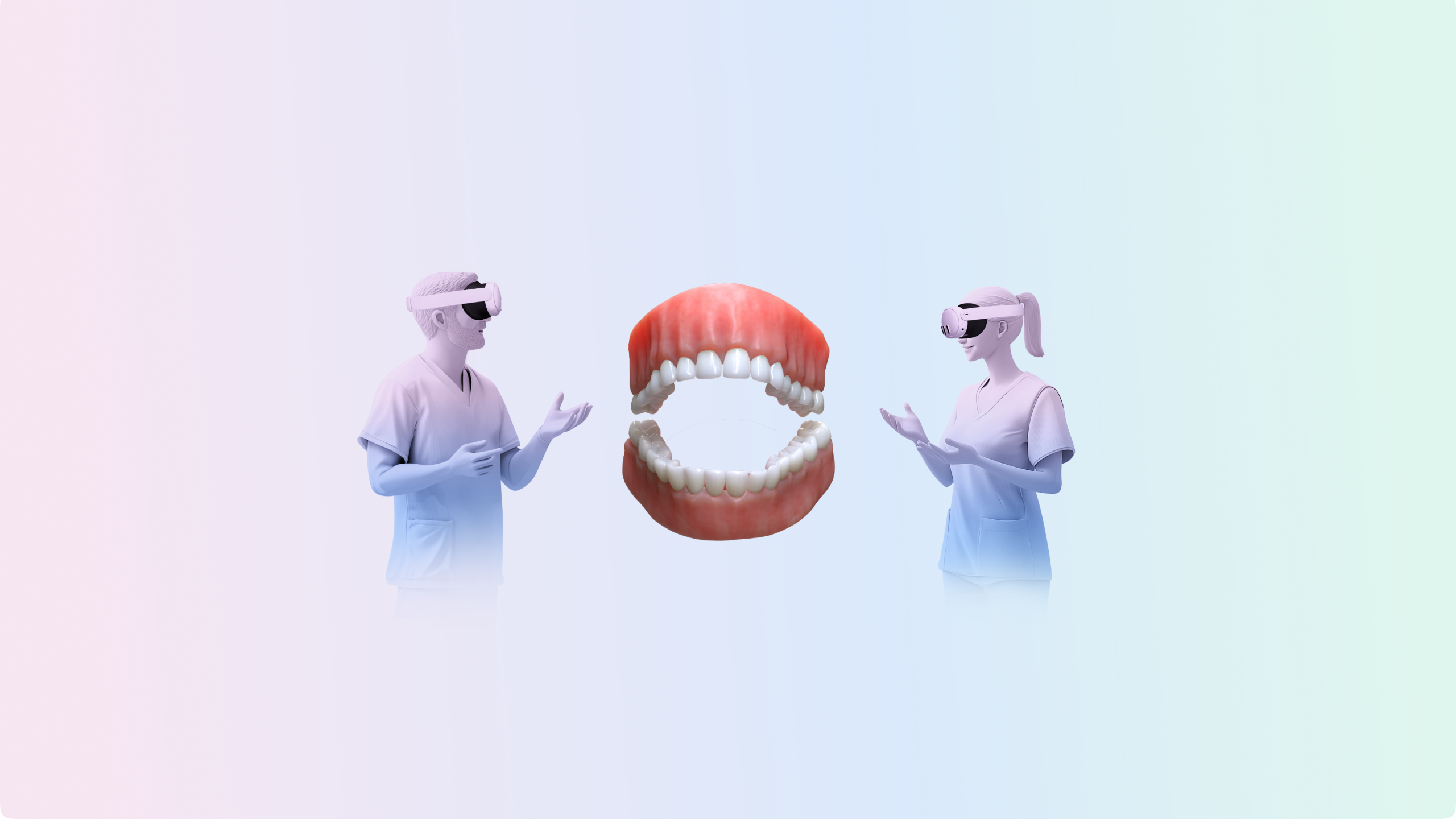
Dentaverse is a Meta Quest VR application that helps dentists prepare patients for long or complex treatments by walking them through the procedure on a life-size 3D jaw.
Built in partnership with Vision Lab, the app reduces patient anxiety and consent friction by letting people see what's about to happen — instead of relying on verbal explanation and 2D X-rays.
Role
Lead Designer
Year
2025
Studio
Vision Lab × Remedico
Scope
Product · VR · Spatial UI
Scope
4
Core VR modules
Meta Quest
Platform
AEEDC
Dubai 2025
Challenge
VR interfaces don't behave like screens.
A button at arm's length isn't the same as a button in a browser — depth, gaze, hand-tracking, and the user's physical orientation in space all become design variables. On top of that, the audience for this product is anxious — many people seeing VR for the first time, with a dental procedure on their mind. The interface had to be calm, slow-paced, and reduce cognitive load while still letting a dentist control what the patient sees.
Modules
Four spatial tools — one clinical environment.
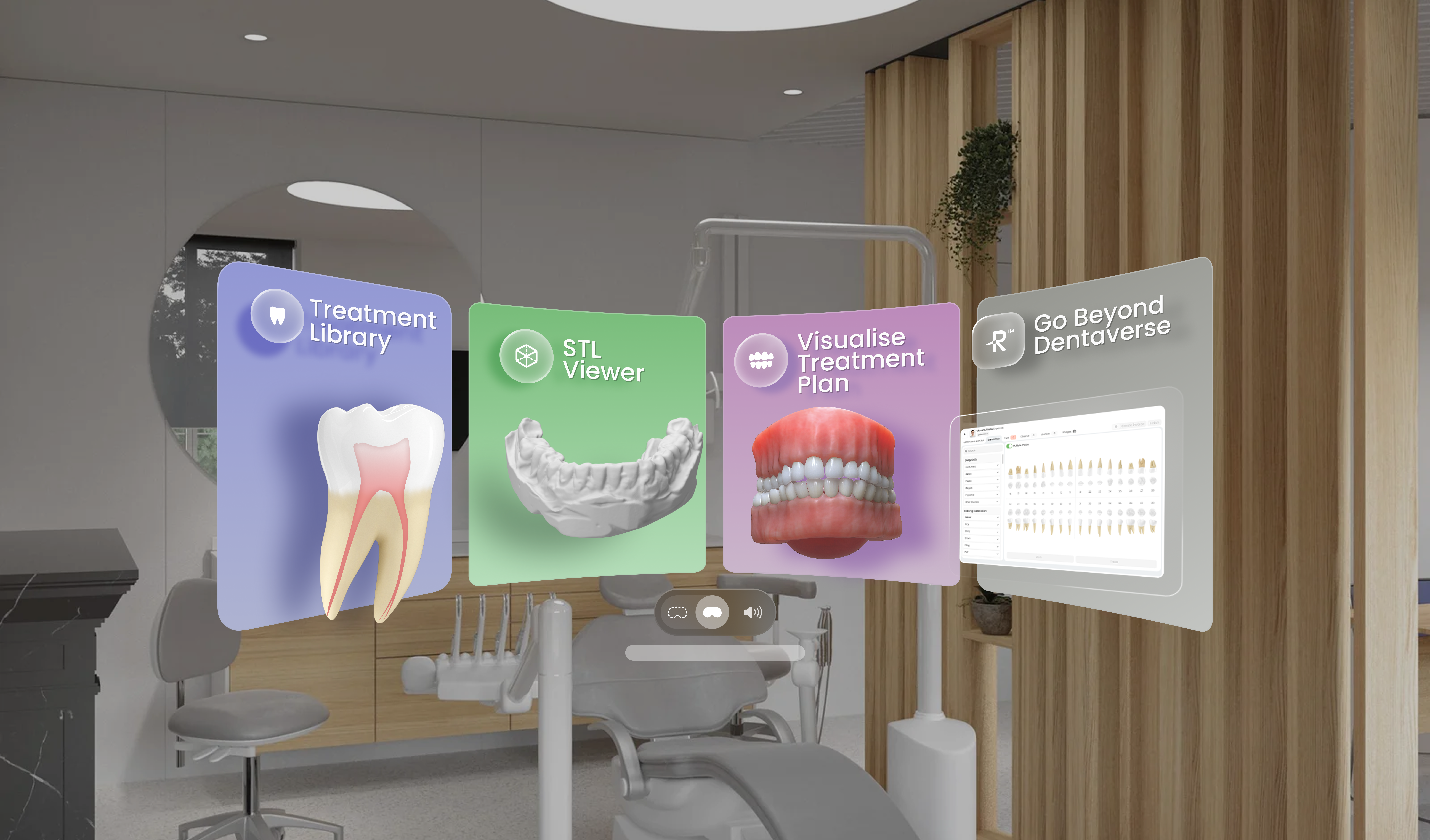
Treatment Library
3D anatomical models of teeth, roots, and structures — organised by diagnosis and procedure for educational and pre-surgical review.
STL Viewer
Import and inspect patient-specific STL files — dental impressions, surgical guides, implant layouts — in full spatial 3D.
Visualise Treatment Plan
Bring a treatment plan into VR. Walk through procedures, phases, and outcomes in a spatial layer above the patient chair.
Go Beyond Dentaverse
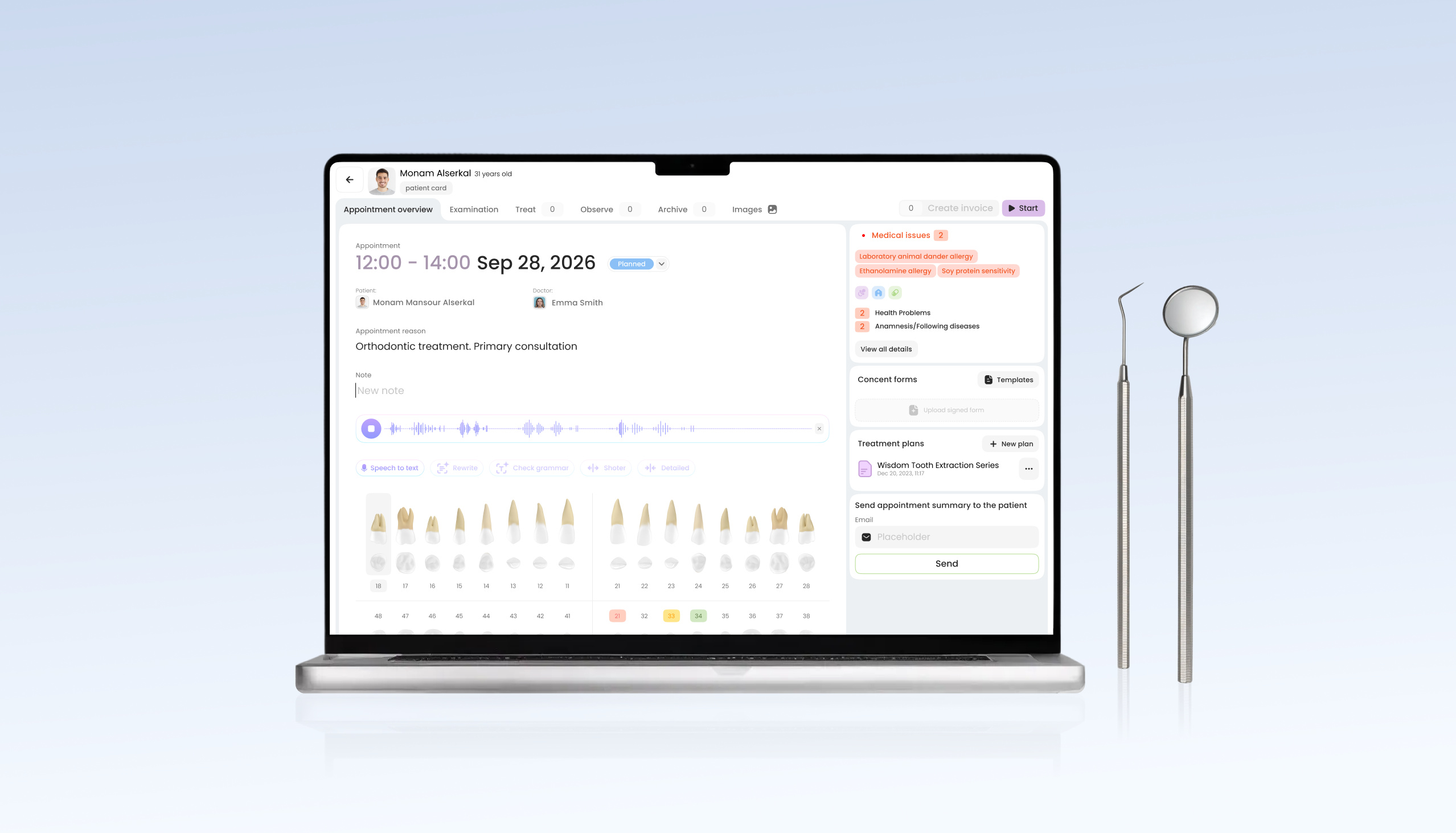
Bridge back into Remedico — access the dental chart, appointment data, and patient records from inside the VR session without removing the headset.
Walkthrough
Design approach
Glass, depth, and restraint.
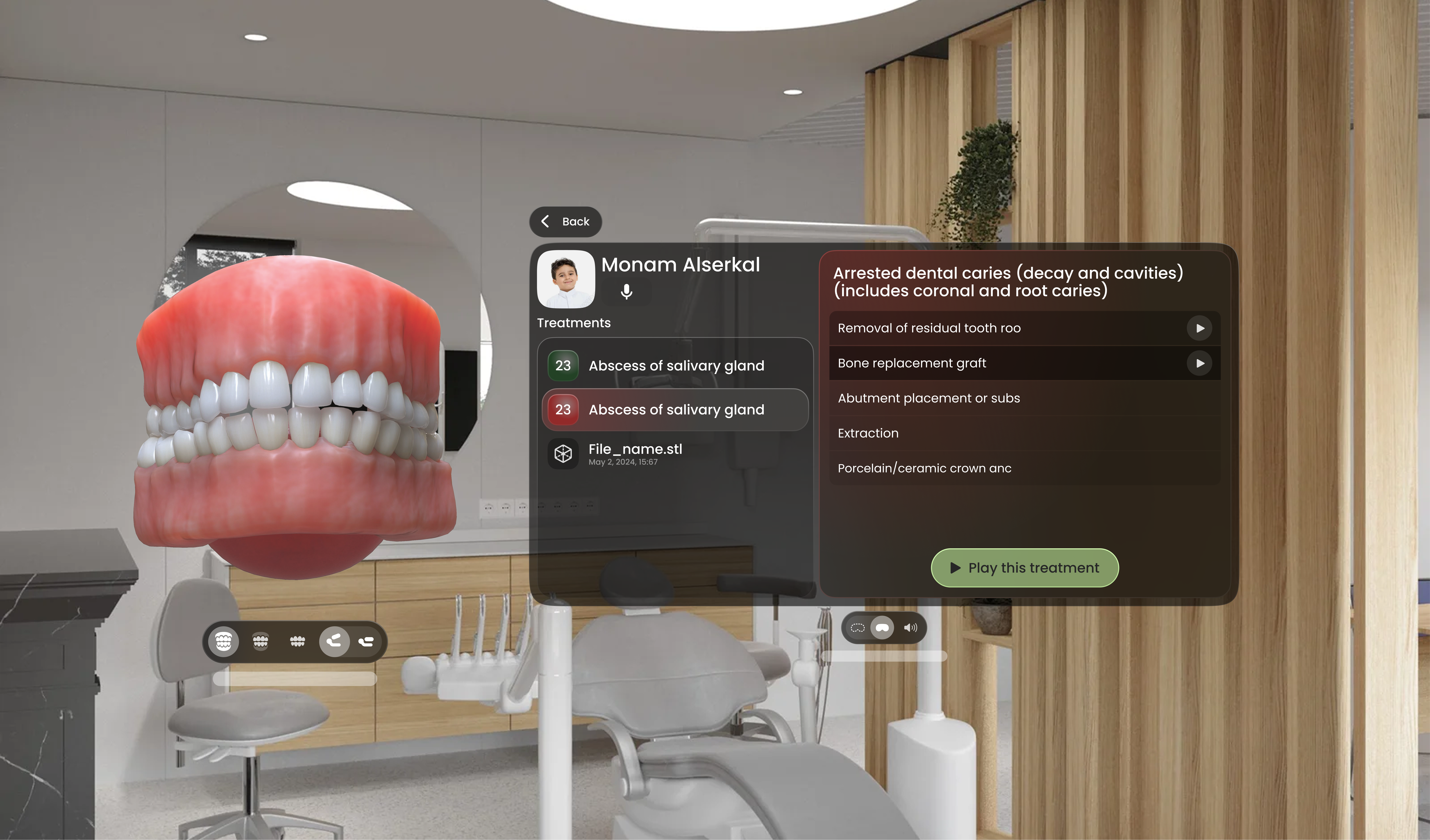
VR UI lives at the intersection of physical and digital. Panels need to feel present — responsive to the room, respectful of depth — while remaining readable in a clinical context.
I designed Dentaverse around glass materials, minimal chrome, high information density only where needed, and the principle that the 3D model is always the primary object — UI serves it, not the other way around.
Every interaction was designed for gloves-off use: eye tracking, pinch gestures, and no small targets.
What I delivered
↳ Brand and logo for Dentaverse
↳ In-headset UI system
↳ Patient walkthrough flow (intro → 3D jaw → procedure animation → recap)
↳ Dentist control surface
↳ Demo presented at AEEDC Dubai 2025
Outcome
A spatial product that extends Remedico beyond the screen — into the room, the chair, and the clinical moment.
Dentaverse showed that the same clinical data that powers a dental SaaS can power a VR experience — if the design holds the two systems together cleanly.